
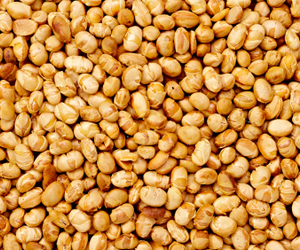
Soy nuts are made from soybeans, and they resemble peanuts in taste and texture. They are eaten as a snack food. Soy nuts are not a traditional health supplement, but they are considered a healthy alternative to other types of snacks.
Soy nuts are a good source of protein. The FDA recommends a diet with at least 25 grams of soy products per day to lower the risk of heart disease.
Not all types of physical activity are suitable for everyone. Users take training advice at their own personal risk.
How Soy Nuts are Made Raw soybeans are toxic for humans and most animals due to the trypsin inhibitors they contain. Trypsin inhibitors are chemicals that prevent an essential enzyme from being used by the body. To destroy the trypsin inhibitor, all raw soybeans must be cooked in liquid.... more
Raw soybeans are toxic for humans and most animals due to the trypsin inhibitors they contain. Trypsin inhibitors are chemicals that prevent an essential enzyme from being used by the body. To destroy the trypsin inhibitor, all raw soybeans must be cooked in liquid.
Soy nuts are first soaked, and then they are baked or fried. Sometimes different flavors are added, such as barbeque, chocolate and cheddar to give variety to the nut as a snack.
According to the Children’s Hospital Boston’s site, ½ cup of soy nuts contains 16 g of protein, 64 mg of calcium and 2 mg of iron. The daily generic recommendation for protein is around 50 g a day. Comparisons between protein and meat are easy to see; three ounces of tuna has 22 g of protein, three ounces of hamburger has 21 and three ounces of shrimp also have 21 g of protein.
Soy food products, such as soy nuts, have long been a favorite of vegetarians and vegans who have chosen a meat-free diet. Comparisons with other similar nonmeat sources of protein show that soy products are the best source for nonmeat protein. Two tablespoons of peanut butter have 8 g of protein, a ½ cup of cooked kidney beans has 8 g and 1/3 cup of hummus has 6 g of protein.
Protein from soy is a complete protein, meaning it contains all of the 9 essential amino acids. Soy protein is a complete replacement for meat protein according to the U.S. Food and Drug Administration (FDA).
Soy nuts have a high amount of protein; soy contains so much protein that it is believed to be a complete substitute to the protein found in meat. Additionally, soy is a protein lacking the cholesterol and saturated fats associated with meat protein.
Soy protein is such a healthy alternative that in 1999 the FDA started to allow products with intact soy protein, or the whole bean, to have labeling which stated that the product may help lower the risk of heart disease.
The FDA only allowed the labeling in connection with whole bean soy products because sometimes the soy bean is broken into individual pieces, and those parts do not have the same benefits as the whole beans.
One part of the soy bean has created a lot of controversy. Isoflavone phytochemicals created a frenzy when they were labeled as “phytoestrogens,” or estrogen from plant sources. Reports abounded that eating soy would give men feminine traits, would raise women’s risk for breast cancer and interfere with fertility.
The concern about phytoestrogens was highest for soy contained in infant formula. Web MD, reports that studies conducted since then have debunked the inaccurate reports about certain soy products, including soy nuts.
An investigative study in 2004, printed in “The Journal of Nutrition”, looked into the safety of soy in baby formula. This study cited the fact that soy has been used in infant foods for almost 100 years in the US, and that soy formula met the standards of the 1980 Infant Formula Act.
Furthermore, the study offers other proofs to refute the claims that the soy in infant formula interferes with immune systems, genitalia formation and brain development. One such proof was that the study that ignited the concerns was conducted on rats, and that animal testing does not convert equally to effects in humans.
The study concluded that there was no danger to any areas of infant development from soy infant formula, and that it provided complete nutrition to babies.
Those who are allergic to other soy products, legumes or nuts are most likely allergic to soy nuts. If you experience severe allergic reactions such as trouble breathing, trouble swallowing, or dizziness, seek immediate medical attention.
There are no listed medical interactions with soy nuts. Only those who know they are allergic to soy should not eat them. The FDA list soybeans as GRAS, or Generally Recognized As Safe.
Soy Nuts are available in health food stores and online nutrition sites. They are sold plain or in a variety of flavors. You can pop them in your mouth and munch them like any other snack food, or sprinkle them on a salad for a healthful crunch.
Looking for some delicious soy nuts? Use the supplement finder now!
| None Known Except For Allergic Reaction |
| Good Source Of Protein |